


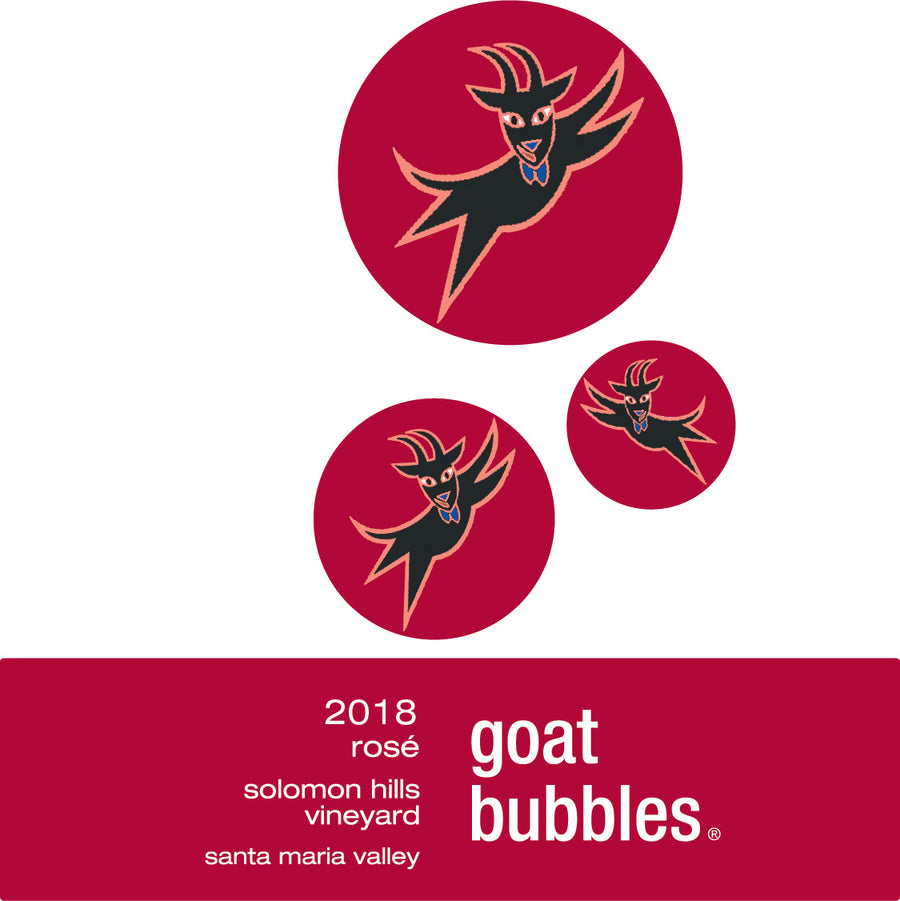
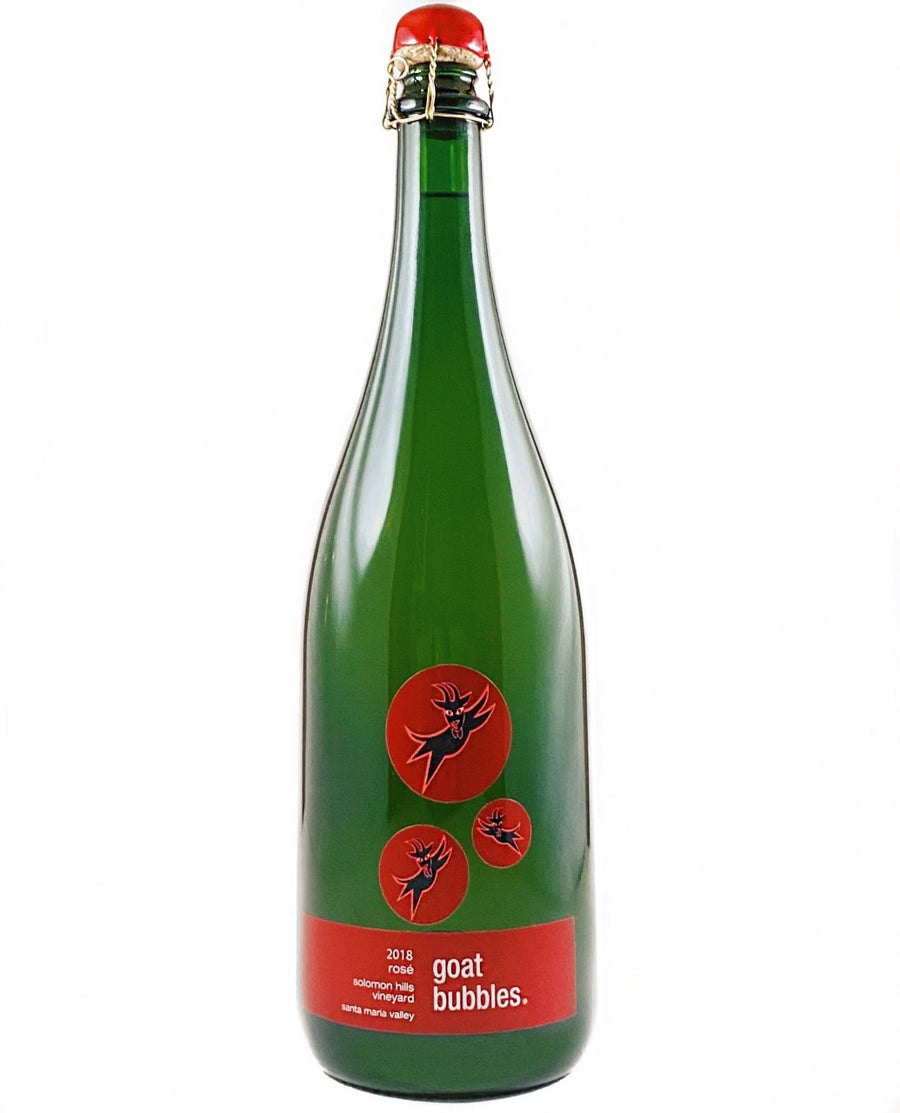
2018 Goat Bubbles, Rosé
Specifications
- Acidity .85g/100ml
- Appellation Santa Maria Valley AVA
- Bottling Date August 5, 2019
- Dosage 1.5g/mL
- Harvest Date September 5, 2018
- ph 3.04
- Region Santa Barbara County
- Type Sparkling
- Varietal Pinot Noir
- Vineyard Solomon Hills Vineyard
- Vintage 2018
- Winemaker Norm Yost
Awards
Wine Enthusiast 91 points.
"Doughy and yeasty aromas meet with a clay-like minerality and melon on the complex nose of this bottling. Bright apple and grapefruit-peel flavors lift the palate, which shows a strong sourdough element."
--Matt Kettmann
Silver Medal - 2022 Orange County Wine Society Fair Commercial Wine Competition
Food Pairing
Pair with ahi sashimi, watermelon cress salad, crepes filled with marzipan and fruit or a traditional cheesecake.
Production Notes
Clone 23; 147 cases produced
Tasting Notes
Enjoy the rich ivory-rose color of this tasty sparkler, along with aromatics of yellow apple, nectarines and wet stone. Refreshing flavors of strawberry and peach, with a hint of cucumber, precede an elegant finish on the palate.
Vineyard Notes
Grapes for Goat Bubbles Rosé are sourced from Solomon Hills Vineyard in the Santa Maria Valley AVA. Pinot Noir clone 23 is used, as this Swiss selection ripens early at low sugar levels, bringing pretty fruit flavors at low alcohol levels.
Winemaker Notes
Grapes for Goat Bubbles Rosé are sourced from Solomon Hills Vineyard in the Santa Maria Valley AVA. Pinot Noir clone 23 is used because this Swiss selection ripens early at low sugar levels, bringing pretty fruit flavors at low alcohol levels. The grapes were hand picked and whole cluster pressed and vinified, as if the wine were destined to be a still Rosé. After aging in neutral French oak barrels and stainless steel drums, the young wine was decanted into sparkling wine bottles, a tirage of sugar and yeast added and a crown cap applied. The resulting secondary fermentation in the bottle traps carbon dioxide in the wine. After more months of aging and riddling to collect all the sediment from the secondary fermentation, the wine was disgorged. In the disgorging process, the necks of each bottle are place into a neck freezer with a solution of food grade propylene glycol which freezes the neck and allows for the removal of the crown cap. The pressure in the wine pushes the frozen plug of sediment out of the bottle. A dosage is added, a champagne cork inserted, a wire cage applied and our signature red wax cap adds the finishing touch.